
Mortgage Pre-Approval
A Mortgage Pre-Approval Is Not the Strategy.
It Is the Starting Point of One.
Most buyers walk away with a number. The ones who work with us walk away with a plan. Documents are reviewed, the file underwritten and ready to make an offer with confidence before setting foot in a single showing.
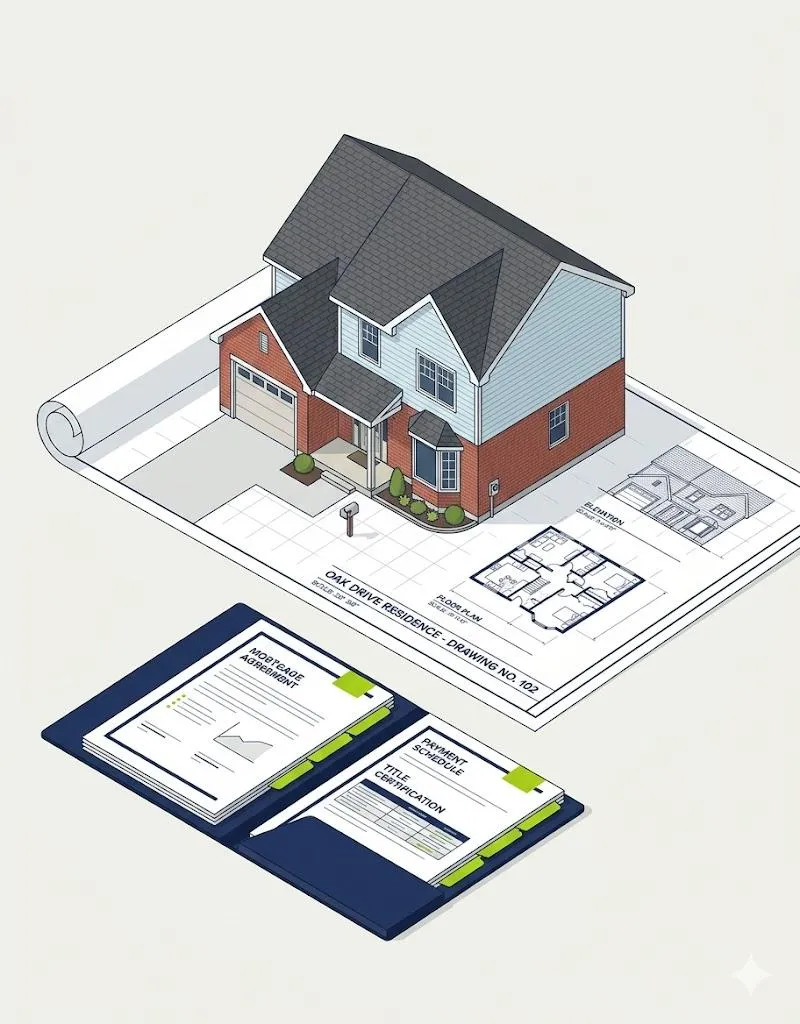
Most buyers don’t realize there are two types of pre-approval.
One is just on paper.
The other is the real thing.
The Bank Version
Your bank reviews what you tell them and may pull your credit report, but the full document review doesn't occur until there's a live deal in front of them. That's a theoretical approval. It looks like confidence. It may not hold up when it matters.
The Pre-Underwritten File
We gather your documents and complete the real underwriting before you start house hunting. By the time you’re looking at homes, a lender has already checked your file. This is the real deal, not just theory.
Pre-Qualified vs. Pre-Approved
Most buyers run into trouble in the gap between these two.
It Is as Much About Education as It Is About a Number
A pre-approval is where the strategy gets built. Where are you now, where are you going, and what does your life look like in 3-years? Those answers shape the mortgage structure. You leave the conversation knowing why, not just what.
One Credit Pull. Every Lender.
Working with a mortgage agent means your credit is pulled once. That single report covers the full lender network. Approaching each bank separately means each one pulls your credit independently, creating multiple hard inquiries against your score.
No Question Is a Silly Question
Most people walk into this conversation not knowing what they do not know. That is the starting point. Every question you have been holding back is worth asking. Pre-approval is when uncertainty gives way to clarity.
This Is Where the Options Get Explored
Fixed or variable. Which term length fits your life?
Which lender structure works for your income and goals? Hundreds of options get filtered down to the ones that actually make sense for your situation.
That process starts here, not when you are already in an offer.
The Right Time Is Before You Find a Home You Love
Avoid the panic of waiting until you've found a property. By then, the clock is already ticking. 20-minutes before you start shopping, everything changes about how you shop.

What We Do Differently
Your File Is Underwritten Before You Ever Walk Into an Offer.
When you go to a bank, the thorough review happens after you've already committed. Colin does the work upfront. Documents are collected, income is verified, and potential issues are identified before they become deal-breakers. By the time you're shopping, there's nothing left to discover.
What You Actually Get
A Pre-Approval That's Built to Hold
Rate Protection
Your rate is locked for 90 to 120 days. If rates drop before you close, you get the lower rate. If rates rise, you're protected.
Multi-Lender Options
We audits 60+ lenders to find which products fit your situation, income structure, and goals. You choose from the full market, not just what one bank products are the you may fit.
A File That's Ready
Because your documents were reviewed at pre-approval, satisfying conditions on your final approval is clean and quick. The gathering work has already been done.
Common Questions
If You've Been Putting This Off, You're Not Alone.
What if the answer is bad news?
Most people are further ahead than they think, and if there are things to address, it's far better to find out now than in the middle of an offer.
The good news: a conversation costs nothing and tells you exactly where you stand.
What it my situation is complicated?
Self-employed, variable income, rental properties, new to Canada: these files take a broker who knows which lenders want them. Complicated is not a problem.
What of I'm not ready to commit to anything yet?
You're not committing to anything by having a conversation. 30-minutes. No obligation. No cost. The only thing it costs you is not knowing where you stand.
It is hard to reach a destination when you do not know where you are going.
In their words.
Real Pre-Approvals. Real Outcomes.
★★★★★
"From our first conversation Colin made us feel like we were in good hands and there was no silly questions. He helped us to think about different scenarios to make the right choice for our financial situation. He went above and beyond for us to make a stressful process feel easy."
★★★★★
"Colin is incredibly knowledgeable and takes the time to explain everything in a clear, visual, and easy-to-understand way. He genuinely cares about finding the best option for you and makes the whole process feel stress-free. I learned so much and would 100% work with him again."
★★★★★
"Colin helped a buyer client with a tricky mortgage situation when she felt defeated after speaking with a few banks. His patience and resourcefulness put my client at ease and she was able to get a perfect mortgage for her situation. He takes the time to ensure everyone is educated and feels safe with decisions moving forward."
Two Buyers Get a Mortgage
Pre-Approval.
Only 1 of Them Gets a Strategy With It.
- One walks away with a number and a rate.
- The other walks away knowing what their file looks like, what lenders want it, what to protect between now and closing, and what their next move is.
Most buyers get a quote.
The ones who come to us get a strategy.
The Lender Approved a Version of You.
That Version Needs to Show Up at Closing.
The lender has a specific picture of your finances at pre-approval. When the full approval comes in after your offer is accepted, they take that picture again. Those two photographs need to match. No new car loans, no large purchases on credit, no job changes. Don't rock the boat.
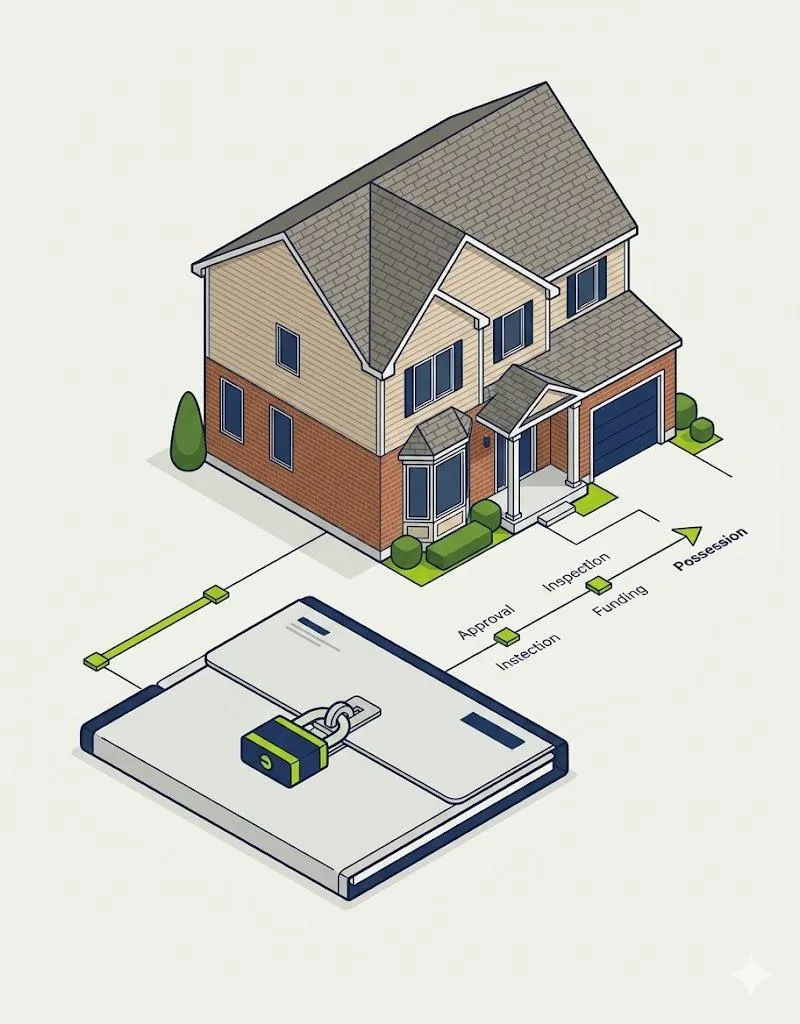
One conversation. Over 60 lenders.
Just one credit check gives you access to the whole market. Saving you time and credit pulls.






You Don't Have to Figure This Out on Your Own.
There is no such thing as a question that is too basic. T
he only one that costs you is the one you do not ask.
No obligations. No forms before we talk.
Just a conversation.
Frequently Asked Questions About Mortgage Pre-Approval
What is the difference between mortgage pre-qualification and pre-approval?
Pre-qualification is an estimate based on numbers you provide, typically through an online calculator. No documents are reviewed, no credit is pulled, and nothing is verified. Pre-approval means a lender has reviewed your actual income, credit, and financial history and issued a conditional commitment. Pre-qualification tells you roughly what you might afford. Pre-approval tells you what you can actually offer on. If you are serious about buying, start with a real pre-approval.
How much do I need for a down payment as a first-time home buyer in Canada?
The minimum down payment in Canada is 5% for homes priced up to $500,000, with a sliding scale above that. However, minimum down payment and optimal down payment are two different conversations. Putting down less than 20% means you pay CMHC mortgage insurance, which adds cost over the life of your mortgage. Whether to put down more or preserve that cash for investing is one of the first things we work through together, because the right answer depends on your full financial picture.
Should I choose a 25-year or 30-year amortization?
It depends on your goals, not just your payment comfort level. A 30-year amortization gives you a lower monthly payment, freeing up cash. If that cash goes into an RRSP or TFSA where compound growth works in your favour over time, the long-term financial outcome can outweigh the extra interest on the longer amortization. Most people are told to pay off their mortgage as fast as possible. That is one strategy. It is not always the best one. We run the numbers for your specific situation before making a recommendation.
What is the First Home Savings Account (FHSA) and should I open one?
The FHSA is a registered account designed specifically for first-time home buyers in Canada. Contributions are tax-deductible like an RRSP, and qualifying withdrawals for a home purchase are tax-free like a TFSA. It is one of the most powerful financial tools available to first-time home buyers right now. The critical detail is that it needs to be opened before you need it. The contribution room accumulates from the day you open the account, not the day you start contributing. If you are even thinking about buying in the next few years, open one now.
What closing costs should I budget for as a first-time home buyer?
Closing costs typically run between 1.5% and 3% of the purchase price, in addition to your down payment. The largest items are usually land transfer tax (Ontario has both a provincial and a municipal land transfer tax if you are buying in Toronto), legal fees, title insurance, and home inspection. First-time homebuyers may qualify for a land transfer tax rebate and the First-Time Home Buyers Tax Credit, which can offset some of these costs. I build a complete closing cost estimate for every client before they make an offer so there are no surprises after they sign.
Does working with a mortgage broker cost me anything?
Mortgage brokers are compensated directly by the lender when a mortgage closes, not by the borrower. There is no fee to have a conversation, get pre-approved, or compare options across multiple lenders. The exception is certain private or alternative lending situations, which I would always disclose upfront. You get access to over 60 lenders and independent advice at no cost to you.
What documents do I need for a mortgage application in Canada?
The core documents are proof of income (T4s, recent pay stubs, or two years of Notice of Assessment if you are self-employed), 90 days of bank statements showing your down payment, a letter of employment, and government-issued ID. The 90-day history on your down payment is the one that catches people off guard most often. If your money has moved between accounts, even if it is all yours, I need statements from every account it touched. Knowing this early means we can plan around it rather than scramble at the last minute.
How does the mortgage stress test work in Canada?
The stress test requires that you qualify at a rate higher than the one you are actually being offered. As of 2024, you must qualify at either the Bank of Canada benchmark rate or your contract rate plus two percent, whichever is higher. In practice, this reduces the amount you can borrow compared to qualifying at your actual rate. It is not a barrier, it is a calculation we account for from the start. Knowing your real buying power before you start shopping prevents the frustration of falling in love with a home that is outside your qualified range.
Licensed mortgage agent and investor.
Strategy-first advice. 25+ years in Canadian real estate and mortgage strategy
The Mortgage Builder
REGULATORY TRANSPARENCY
License: Mortgage Agent, FSRA Ontario | Lic. M22000539
Brokerage: BRX Mortgage
Colin Ballantyne is a licensed mortgage agent with BRX Mortgage.
Not all applicants will qualify. This website is for informational purposes only and does not constitute financial advice.
© 2026 Colin Ballantyne — All rights reserved.