
Where Both Paths Begin
You don’t have to figure out the financial side of this on your own.
Three Things That Feel True Right Now...
and What Is Worth Questioning.
Can I Qualify on My Ow
The original mortgage was built on two incomes. The new one must qualify on one, and it is larger. That math is hard. But it is not always impossible. Support payments, rental income, and the right lender structure can change the outcome significantly. The bank's answer is one data point, not the final word.
I Just Need to Know
What My Options Are
Some people want to keep the home. Others want to take their equity and start over somewhere smaller. Both are valid, and both paths have mortgage implications most people never think through until they are already under pressure. There are more options than most people realize, in either direction.
I Don't Know Where to Start
There are three professionals involved at once: a family lawyer, a real estate lawyer, and a mortgage broker. Most people do not know how these pieces fit together or how the mortgage timeline aligns with legal deadlines. Confusion causes inaction. Inaction can become a financial and legal problem.
Where Both Paths Begin
Two Different Outcomes.
One Challenge in Common.
Whether you want to keep the home or take your equity and buy something new, you are now qualifying on one income instead of two. That is the common challenge in both paths. It is not always an impossible equation, but it requires a different approach than a standard mortgage application.
If You Want to Keep the Home
The new mortgage must cover the existing balance plus the buyout payment owed to the departing spouse. There are programs specifically designed for this situation that most bank representatives do not mention.
If You Want to Sell and Buy Something New
Your share of the equity becomes your down payment. But qualifying for the new mortgage likely means qualifying on your income alone. Support payments you receive, the right lender, and the right structure can change what that number looks like. The bank is not the only place to start.
What Most People Don't Know.
There Is a Program Built Specifically for
This Situation.
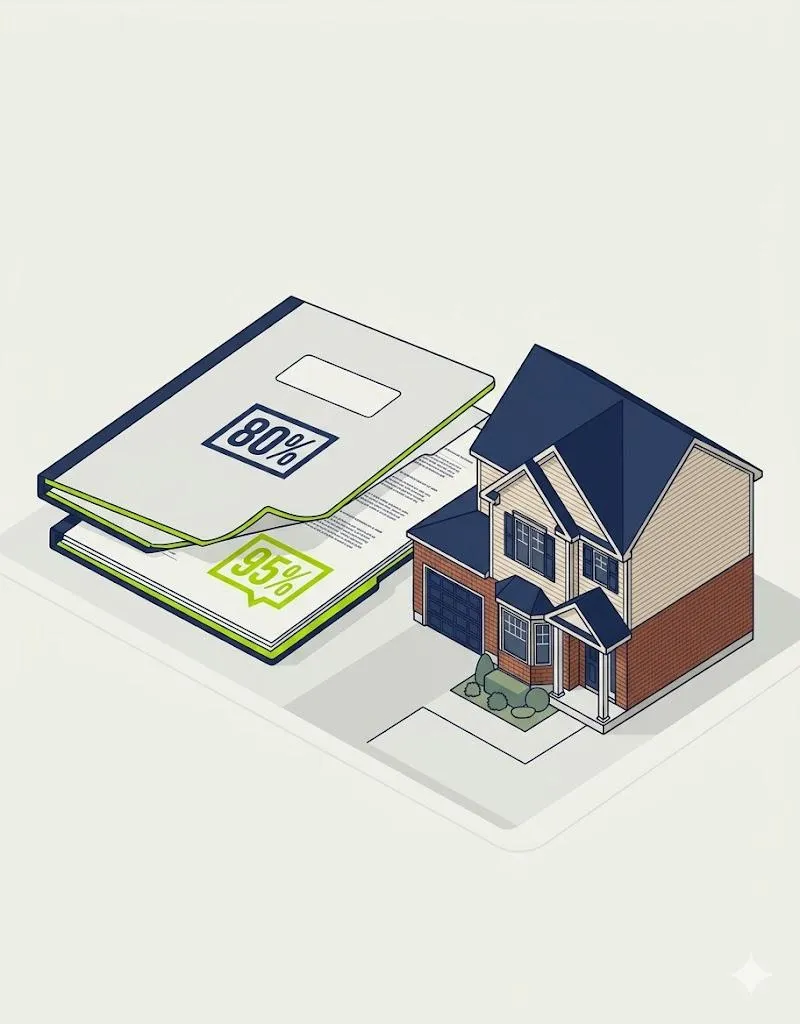
The CMHC Relationship Breakdown Program allows the buying spouse to refinance up to 95% of the home's appraised value.
Stay on top of your credit during this time. Close joint accounts, keep up with payments, and hold off on opening anything new until your mortgage is sorted.
Your budget will need to account or secondary costs during the transition, such as legal fees, property appraisals, and potential land transfer taxes.
If you have lived separately from your ex-spouse for at least 90 days, you can qualify as a first-time home buyer.
How the Process Works
The Sequence Matters.
Here Is How It Fits Together.
What I actually do is listen. Understand your goals, your timeline, your life. Then come back with options built around where you're going. Not a one-size-fits-all product off a shelf. A plan built specifically for you.
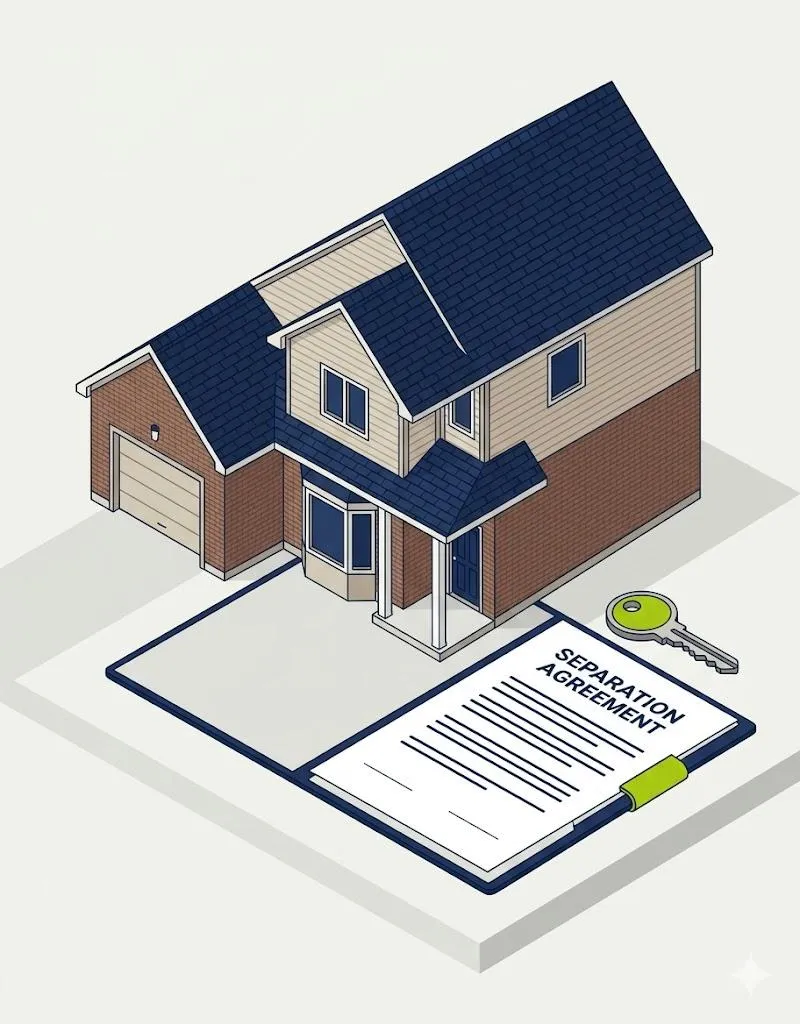
The Separation Agreement Comes First
Virtually every lender requires a legally binding separation agreement before processing a buyout or purchase. The mortgage cannot close without it. Colin aligns the mortgage timeline with the legal process so there are no gaps between the agreement being signed and the file being ready to move.
The Appraisal Sets the Number
The buyout amount is based on the home's current appraised value, not the purchase price, not an online estimate. An independent appraisal is required by lenders and adds to the process timeline. Colin coordinates this as part of the mortgage file
Two Lawyers, Not One
A family lawyer manages the separation agreement. A real estate lawyer handles the title transfer. These are two separate processes, separate fees, and timelines that must align. We work alongside both to keep the mortgage moving in step with the legal closing.
Support Payments Can Count as Income
If you receive court-ordered spousal or child support with at least three years remaining in the agreement, most lenders will include that income toward qualification. This can bridge a significant gap between what two incomes approved and what one income can carry alone.
The Capital Gains Question
A matrimonial home buyout is typically exempt from capital gains as a principal residence. But the structure of the asset split matters. Colin flags this for the client's accountant so nothing is missed during the transition.
WHAT YOU GET
What Clients Say
★★★★★
"There were a lot of hoops to jump through with 2 divorced people on title and LOTS of life behind both of us. Colin was patient and super supportive through all of it. He surpassed my expectations and got us the terms we were looking for."
★★★★★
"Not only was Colin organized, knowledgeable and strategic in finding an appropriate solution, he was also able to keep open communication with all parties involved which segued into a seamless closing and an exceptional result. He enabled her to remain in her property"
★★★★★
"I had some weird issues with my present mortgage and Colin worked through options and gave his recommendations.In the end, his recommendation did not earn him any money and yet he was more than willing to continue to answer questions. He even told me how and what to ask for from the bank."
Ready to Find Out What Is Possible?
You Do Not Have to Navigate
this Alone.
A 20-minute call gives you a clear picture of where you actually stand, what you qualify for, which programs apply, and how the mortgage timeline fits alongside your legal process.
There is no cost and no obligation.
Just clarity on your options at a moment when clarity matters.
Frequently Asked Questions
Separation changes everything about how lenders look at your file. These are the questions I hear most often from clients navigating a spousal buyout or qualifying on their own for the first time.
Can I keep the house after separation in Ontario?
Yes, in many cases. One spouse can keep the home by refinancing the mortgage to buy out the other's share of the equity and removing them from both the title and the mortgage. Whether you qualify for a new mortgage on a single income and which programs apply to your situation, depends on your income, the appraised value, and how the separation agreement structures the asset division. It is worth getting a clear answer before assuming a sale is the only option.
How does a spousal buyout mortgage work in Canada?
The buying spouse refinances the existing mortgage into a new mortgage in their name only. That new mortgage covers the existing balance plus the buyout payment owed to the departing spouse. The buyout amount is based on the home's current appraised value, not the original purchase price. A separation agreement is required before most lenders will process the refinance. The departing spouse is removed from both the property title and the mortgage.
What is the CMHC relationship breakdown program?
When a mortgage is CMHC-insured, relationship breakdown is a recognized lending category with specific rules. The program allows the buying spouse to refinance up to 95% of the home's appraised value, significantly higher than the standard refinancing ceiling of 80%. This program is specifically designed for separating couples and can change the buyout math considerably for those who originally purchased with less than 20% down. Most people navigating a separation, are not aware it exists.
Can I qualify for a spousal buyout mortgage on one income?
Sometimes yes, sometimes no, and the answer depends on more than most people realize. Income sources the bank did not count, support payments that qualify, the right lender and product structure, and rental income from the property can all shift the math. The original mortgage was qualified on two incomes. The new one may be larger and must qualify on one. That is a difficult equation, but it is not always an impossible one.
Does spousal or child support count as income for a mortgage?
If you receive spousal or child support documented in a separation agreement with at least three years remaining, most lenders will include that income toward your mortgage qualification. If you are paying support, it is treated as a liability against your income. This distinction can bridge a meaningful gap between what two incomes previously qualified for and what one income can carry alone.
What if my bank said I cannot afford to keep the house?
The bank reviewed one income against one product at one rate. That is one lender's assessment and not the complete picture. Some lenders have programs specifically for relationship breakdown. Some use alternative income calculations. Some factor in rental income or equity structures that change what you qualify for. A no from your current bank is worth exploring, not accepting as final.
Do I need a separation agreement before applying for a mortgage?
Yes. Virtually all lenders require a legally binding separation agreement before processing a buyout refinance. The mortgage cannot close without it. This is frequently the primary timeline bottleneck. The earlier a mortgage broker is involved, the better the mortgage process can be aligned with the legal timeline so both close together.
How is the buyout amount in a spousal buyout calculated?
The buyout amount is based on the home's current appraised value, not the original purchase price and not an online estimate. An independent appraisal is required by lenders. The equity, calculated as appraised value minus the existing mortgage balance and any secured debts, is then divided according to the separation agreement. The buying spouse refinances to cover both the remaining mortgage balance and the departing spouse's equity share.
What if I want to sell the house and use my equity to buy somewhere new, can I qualify on my own?
Yes, in many cases. When you sell, your share of the equity becomes your down payment on the new property. Whether you qualify for a new mortgage depends on your income, any support payments you receive, and your debt load going forward. If you are paying support, that reduces what you can borrow. If you are receiving it, most lenders will count it as income once it is documented in a signed separation agreement. The stress test applies to any new purchase. A mortgage broker can run the numbers against your actual situation and tell you what purchase price is realistic, before you start shopping.
How soon after separation can I apply for a new mortgage in Canada?
There is no mandatory waiting period. You can apply for a new mortgage as soon as you have a signed separation agreement and can demonstrate that you qualify on your own income. In practice, the timing is driven by the legal process, not the mortgage process. The earlier you speak with a mortgage broker, the better your chances of having your financing ready when your legal timeline closes. Some clients have a mortgage in place within weeks of a signed agreement. Others take longer depending on income documentation and lender requirements.
A Few Of Our Partners






Licensed mortgage agent and investor.
Strategy-first advice. 25+ years in Canadian real estate and mortgage strategy
The Mortgage Builder
REGULATORY TRANSPARENCY
License: Mortgage Agent, FSRA Ontario | Lic. M22000539
Brokerage: BRX Mortgage
Colin Ballantyne is a licensed mortgage agent with BRX Mortgage.
Not all applicants will qualify. This website is for informational purposes only and does not constitute financial advice.
© 2026 Colin Ballantyne — All rights reserved.